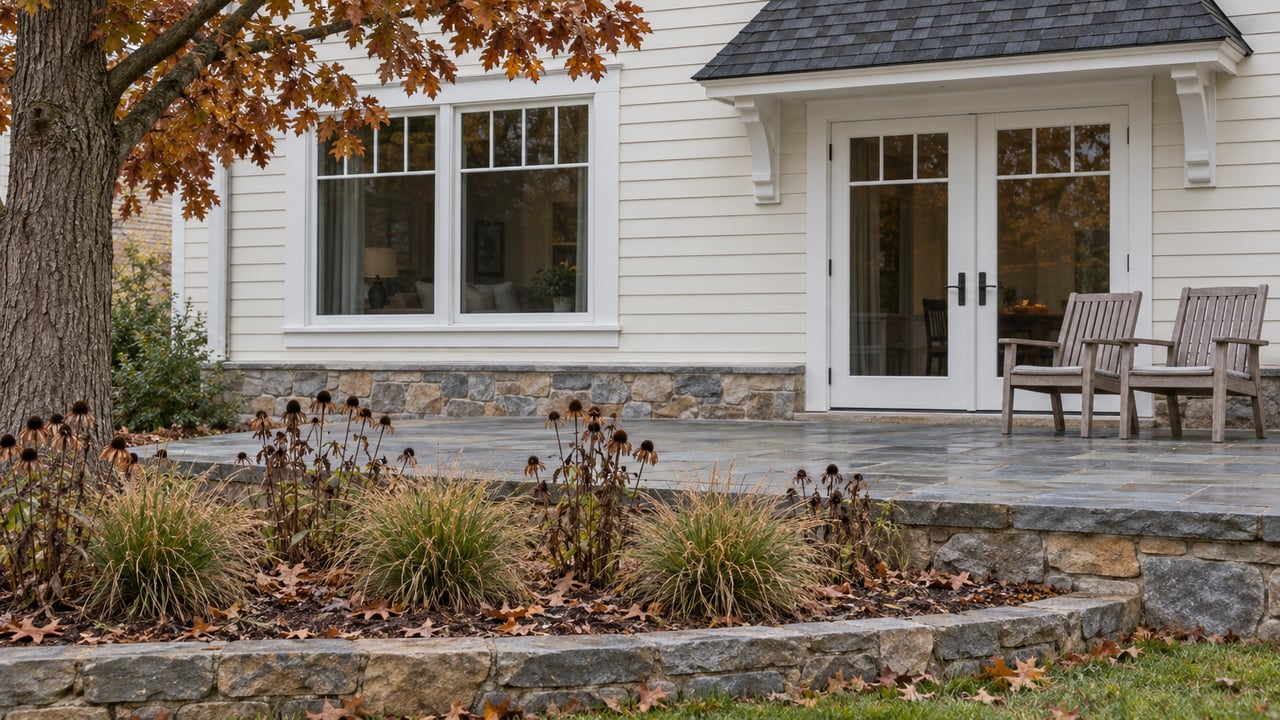
Most gardens open in spring so they can show off their best weeks first. Planting Fields opened its new one-acre Piet Oudolf garden on Oct. 17, 2026, with frost only weeks away. The timing fits the design. The garden is built to look good while it fades, so the coming November and December will be the first real test of it. Planting Fields sits inside the Village of Upper Brookville, in the Town of Oyster Bay. Its address, 1395 Planting Fields Road, is listed under Oyster Bay, NY 11771. For people who live nearby, that test runs right alongside the arboretum's busiest indoor season of the year.
A Garden Meant to Be Seen Dying Back
The Herald counted about 400 people at the opening. The paper reported that the garden sits behind the Blue Pool Garden, next to the historic Rose Arbor, and holds more than 25,000 plants and grasses. It is also Oudolf's first public garden in New York in more than a decade. The plant count grew over the past year. In January, Newsday described a 24,000-plant garden, and another 2,000 plants arrived in September after most of the planting was done.
The Planting Fields Foundation calls the project the most significant addition to the site since the Olmsted Brothers finished their work there in the 1930s. The Olmsted-era landscape is lawns and specimen trees that read well all year. The Oudolf Garden is a meadow of perennials. Under normal garden practice, a meadow like that would be cut to the ground once the flowers are gone.
That won't happen here. The same Newsday piece reported that the garden's curators will leave the seed heads standing over winter so visitors can watch the plants change through the year. Foundation president and CEO Gina Wouters described the idea to the paper:
"His whole approach to gardening is thinking about the beauty of a garden and the value of a garden in four seasons, not just the one season when it's blooming."
She told Newsday the goal is to give plants a visual purpose even as they decay, "allowing them to have multiple lives." Oudolf's best-known public work follows the same rhythm. The High Line leaves dried leaves, stalks and seed heads standing through winter for both looks and wildlife habitat, then cuts everything back each March. That routine is the clearest public example of how an Oudolf planting spends the cold months.
What the Meadow Is Made Of
What the garden looks like in winter depends on which plants hold their shape after they brown. A July 2026 Foundation update published through I LOVE NY lists more than 100 species, with prairie dropseed as the anchor of the meadow. The other named plants are:
- Threadleaf bluestar, Amsonia hubrichtii
- Pale purple coneflower 'Hula Dancer', Echinacea pallida
- Purple lovegrass, Eragrostis spectabilis
- Yarrow 'Moonshine', Achillea
- Calamint, Calamintha nepeta ssp. nepeta
- Ornamental onion 'Summer Beauty', Allium lusitanicum
The ground is part of the design too. Newsday's July walk-through described slopes that hide one side of the garden from the other and paths that "reward further exploration." An August visitor account on Side of Culture mentions pea-gravel paths, curving wooden benches and slightly raised meadow areas in the center where people can sit. Wouters told the Herald that on the day after the opening she saw families exploring, children running and visitors relaxing on the mounds. Once the color is gone, the slopes, paths and grass shapes are what's left to see.
November Is a Working Month in the Garden
A garden that just opened is not a finished garden. The Herald reported two things that will change it over the coming weeks:
- About 22,000 bulbs go into the ground in November. Those bulbs won't show until spring. A walk this month passes over next season's display while the current one dries out on top of it.
- Deer have already gotten into the fenced garden. The Foundation is using a natural spray to discourage browsing and is considering other measures as the garden matures. Anyone who gardens in Upper Brookville will recognize the problem.
The Rose Arbor at the center of the garden is due for work as well. The Foundation plans to restore it with 31 new custom-designed arbors and is raising $300,000 for the design, construction and ongoing care. It has not published a construction timetable.
The rest of the park is winding down at the same time. The self-guided Main House tour season ends Nov. 15. Until then, entry is at 1, 2 or 3 p.m. on Fridays through Sundays, and tickets cost $15 general, $14 for seniors 62 and older, and $5 for ages 6 to 17. Seasonal parking fees of $8 per car stop in mid-November. The Foundation lists Nov. 16 as the last collection day and New York State Parks lists Nov. 15. The Foundation posts park hours of 9 a.m. to 5 p.m. daily, closed Dec. 25, while State Parks lists 4:30 p.m. as closing time. On a short winter afternoon, plan around the earlier hour. Both greenhouses stay open Wednesday through Monday, 10 a.m. to 4 p.m., free and with no reservation needed.
After mid-November, you can park free and walk to a garden that was built to be seen at exactly this time of year.
December Moves Indoors, a Short Walk From the Meadow
From here, most of the arboretum's programming moves inside the Main House, the 67-room mansion once called Coe Hall. A visit to the house now also puts you close to the garden. Here is the calendar from the publish date through the end of the year, at regular prices:
| Date | Program | Time | Cost |
|---|---|---|---|
| Fri., Nov. 6 | First Fridays: The Wonderful World of Everett Shinn, with a look at the restored Tea House | 10–11 a.m. | $25 |
| Tue., Nov. 17 | Little Sound Explorers, ages 2–7 | 3:30–4:30 p.m. | $25 per child |
| Sat., Nov. 21 | Pirate Coe's Treasure Hunt, reservations required | 10:30 a.m.–12:30 p.m. | $4 |
| Fri., Dec. 4 | First Fridays: Holiday Magic at the Main House | 10–11 a.m. | $25 |
| Sat., Dec. 5 | Owl Prowl, reservations required | 4:30–6:30 p.m. | $4 |
| Sat., Dec. 5 | Deck the Halls benefit | 6:30–9:30 p.m. | $350 |
| Dec. 9–30 | Holiday House Tours, self-guided | 10 a.m.–4 p.m.; Dec. 9 until 1 p.m. | $20; $10 ages 6–17 |
| Fri.–Sun., Dec. 12–20 | Holiday House Tours, guided | 10 a.m., 11 a.m., noon | $25; $10 ages 6–17 |
| Dec. 18 and 19 | Notes in Nature: Fireside Melodies | 7–8:30 p.m. | $45 advance; $50 at door |
| Dec. 19–20 | Home for the Holidays festival | 9:30 a.m.–12:30 p.m. and 1–4 p.m. | $25; $15 ages 4–12 |
Some of these have changed since last year. On Dec. 9, the first day of the Holiday House Tours, self-guided entry runs only until 1 p.m., and last entry on other days is 3:30. In 2025 the guided tours ran through Dec. 28. This year they end Dec. 20. Home for the Holidays now runs over two days, Saturday and Sunday. Last year it ran Dec. 12–14 and included a Friday evening session. The festival page confirms Santa will be there, but the full schedule hasn't been posted yet. Fireside Melodies adds a Dec. 18 performance this year. In 2025 it played only on Dec. 13. Deck the Halls returns at $350 a ticket, up from $325 in 2025. This year's proceeds support the gardens and the Youth Leaders program.
Pairing the House With the Garden
These programs line up well with a garden that keeps its structure in the cold. Holiday Magic on Dec. 4 is the clearest example. The guided tour covers how the Main House is decorated for the holidays, including gathering materials from the grounds, so the house tour and the outdoor collection are part of the same program. The 4:30 p.m. Owl Prowl on Dec. 5 starts around dusk, when standing grasses and seed heads stand out against the low light. A morning self-guided house tour leaves enough daylight to walk to the meadow afterward.
Fiona Tan's "Fragment of the Foundations for a Babel Tower" opened on the East Lawn the same day as the garden. It is part of the Foundation's 2026 Catalyst program and stays up through Sept. 1, 2027. Both new additions will be on view through every season of their first year.
The schedule leaves room to come back. A walk in mid-November will find the bulbs going in and the first frost-browned grasses. Another visit during holiday tour week in December will find the same beds in their full winter form. If you saw Planting Fields at its October peak in our fall guide to Oyster Bay, these months show the newest acre at the point it was designed for.
The idea behind the garden carries over to North Shore homes. A property's grounds are seen in every season, and buyers often visit in the months when a garden is bare. Patricia's team at Patricia Santella plans listing photography and timing around how a home's grounds look in the month it goes on the market, including late fall and winter. If you're considering a sale in Upper Brookville or nearby, request your personalized market plan and we'll show you how your property would present in the season you'd list.