If you get a summons to Oyster Bay Cove Village Court, you won't be going to Oyster Bay Cove. The village holds court ten minutes away, inside the Village of Laurel Hollow at 1492 Laurel Hollow Road. Zoning and planning board meetings don't happen at a municipal building either. They happen in a classroom building at East Woods School, the private day school on Yellow Cote Road that most of the village's civic business quietly runs through.
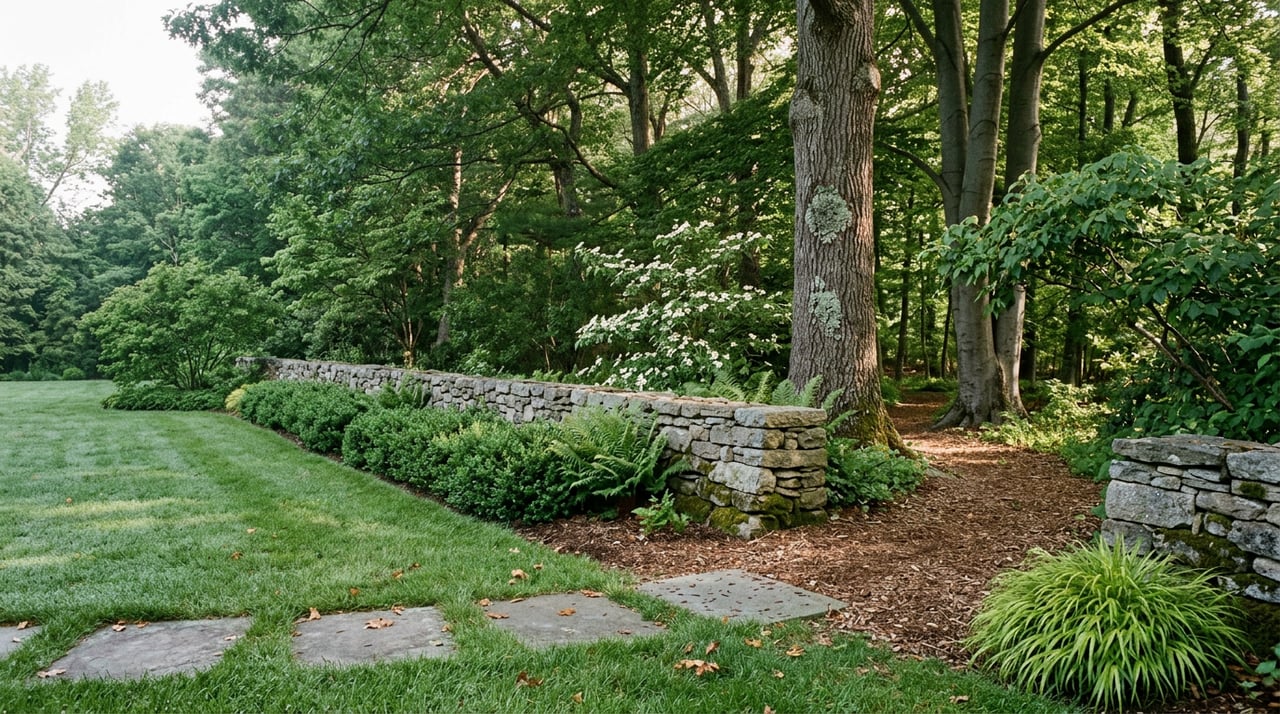
For a village incorporated back in 1931, that might sound like an oversight. It isn't. Oyster Bay Cove was built to stay small on purpose, and what it lacks in municipal infrastructure it has been putting somewhere else for a century: into land. Not parks in the traditional sense, and not manicured village greens, but a connected run of protected acreage that residents can walk into for free, most of it older than the village government itself, and one new piece added just this year.
The Loop Most Residents Already Walk, Without Knowing Its Full Shape
One property sits inside the village. The other sits a few minutes past it, on the small peninsula next door, and most residents have visited both without ever separating them in their head.
The Theodore Roosevelt Sanctuary and Audubon Center sits at 134 Cove Road, a location the village's own newsletter identifies as inside Oyster Bay Cove. It was established in 1923 as the first Audubon songbird sanctuary in the nation, built on land that Emlen Roosevelt, the president's cousin, purchased around Youngs Memorial Cemetery specifically so it could be preserved. Roosevelt's own gravesite sits at the edge of the property. The sanctuary's fourteen acres hold native plant gardens, several small ponds, and roughly a mile of looped trails, some gravel, some wood-chipped, with a fountain sculpture by Bessie Potter Vonnoh dedicated in the president's memory in 1927. A few minutes further out Cove Neck Road, on the small peninsula of Cove Neck, a separately incorporated village, Sagamore Hill National Historic Site covers a much larger 83 acres, all of it free to enter, with grounds open daily from sunrise to sunset.
Put the two side by side and the contrast in scale gets specific fast.
| Site | Location | Acreage | Trail | Cost | Hours |
|---|---|---|---|---|---|
| Theodore Roosevelt Sanctuary & Audubon Center | Oyster Bay Cove | 14 acres | About 1 mile of looped garden and woodland trails | $5 suggested donation | Mon-Fri 9am-4pm, Sat-Sun noon-4pm |
| Sagamore Hill National Historic Site | Cove Neck | 83 acres | 0.7-mile roundtrip trail descending 120 feet to a preserved Roosevelt family beach on Cold Spring Harbor | Free | Grounds open daily, sunrise to sunset |
Sagamore Hill is six times the acreage of the sanctuary inside the village line, and it costs nothing to walk. The sanctuary asks five dollars at the gate. That gap isn't an accident of pricing. It's a difference in who pays the bills.
Two Stewards, Two Different Trajectories
Sagamore Hill is federally run, part of the National Park Service, funded through congressional appropriations and staffed by rangers. The Theodore Roosevelt Sanctuary is managed by Audubon New York, a nonprofit that depends on trail donations, membership, and programming revenue like its long-running summer camp sessions to keep the grounds maintained.
That funding difference shows up on the ground. Recent visitor accounts describe Sagamore Hill's trails and buildings as well kept, with the Old Orchard Museum staffed for house tours Thursday through Sunday and a dog-friendly policy, called B.A.R.K., that lets leashed pets join the walk down to the harbor. Visitors to the sanctuary have posted a more mixed picture, with some describing the entrance fountain in need of repair and bird activity lighter than they remember from earlier visits, even as goats have been used on-site for invasive plant removal and the summer camp program keeps running full sessions each July and August.
Neither picture cancels the other out. What it tells a resident who actually uses these trails is that the two properties sitting a few minutes apart, one inside the village and one just over the line in Cove Neck, are not interchangeable, and that the one costing five dollars is the one more likely to need it. If you've noticed either place looking a little different than it used to, you weren't imagining it. You were seeing two different funding models age differently over the same twenty years.
The Five Acres Nobody Saw Coming
In January 2026, the North Shore Land Alliance was awarded a $1.285 million grant through the New York State Department of Environmental Conservation's Water Quality Improvement Project program to acquire and permanently protect nearly five acres of the Pulling property in Oyster Bay Cove. The land sits inside the Oyster Bay Special Groundwater Protection Area, one of the aquifer zones that supplies drinking water to a large stretch of Long Island. As LongIsland.com reported at the time, the parcel "has been owned and cared for by the Pulling Family for over 100 years."
Five acres won't reroute anyone's weekend walk on its own. But it's worth noticing what it signals. This is a private, century-held family property converting into permanently protected open space, funded in part by a state water-quality program rather than a parks budget, in a village that already has more protected acreage than commercial square footage. The sanctuary and Sagamore Hill were both preserved for historical reasons tied to one family. The Pulling acquisition is being preserved for a hydrological reason tied to everyone downstream. That's a different kind of protection, and it suggests the village's approach to open land isn't just inherited history repeating itself. It's an active, ongoing habit.
The Village's Civic Life Runs Through the Same Small Set of Places
That habit extends past conservation acreage into how the village actually functions day to day. East Woods School, founded in 1946 and still educating roughly 200 students from pre-nursery through eighth grade, hosts the village's zoning and planning board meetings in its own classrooms. The village office at 68 West Main Street keeps limited hours, open Monday, Wednesday, and Friday from 10am to 2pm. And each May, the sanctuary on Cove Road becomes the site of the elementary school Shorebird Award Ceremony at the Theodore Roosevelt Sanctuary and Audubon Center, where student artists from schools in Oyster Bay, Westbury, and Glen Cove design signage meant for real shorebird habitats along Long Island's beaches and waterways.
None of these venues were built as civic infrastructure. A school became a meeting hall. A songbird sanctuary became an awards venue. A neighboring village's courthouse became this village's courthouse. The pattern holds: Oyster Bay Cove borrows and shares rather than builds, and the acreage it does hold onto, it holds onto with unusual consistency.
Planning a Walk Here This Fall
For residents thinking through a weekend loop before the weather turns, a few practical notes worth keeping straight:
- Sagamore Hill's grounds and trails are free and open daily from sunrise to sunset, but house tours run Thursday through Sunday and require advance reservations through Recreation.gov, released same-day at 9:30am if staffing allows.
- The Theodore Roosevelt Sanctuary keeps shorter public hours, closed to visitors before 9am on weekdays and not opening until noon on weekends, with a suggested five-dollar donation at the trail entrance.
- Getting from one to the other means a short drive out Cove Neck Road rather than a walk between them, since the sanctuary sits inside Oyster Bay Cove while Sagamore Hill sits in the neighboring village of Cove Neck.
The through-line across all of this, the courthouse ten minutes away, the zoning meetings held in a school classroom, the five new acres funded by a water district rather than a parks department, is a village that has never needed much built infrastructure because it decided a long time ago to keep the land instead. That's not a detail you'd find comparing listing photos. It's the kind of thing you only notice after you've lived here long enough to wonder why the courthouse isn't actually in your village at all.
If you're weighing a move within the North Shore or thinking about what a property here is really worth once you understand the land around it, not just the land on the lot line, Patricia Santella has spent her career reading these villages block by block. Reach out to talk through what's happening in Oyster Bay Cove and the surrounding North Shore neighborhoods she covers, or explore how nearby Laurel Hollow compares for estate buyers if you're already thinking beyond this particular stretch of trail.